A440 vs. A432: Understanding Hertz in Music
Seeing "440 Hz" on a tuner is only the start. Frequency (measured in Hertz) underpins pitch, instrument setup, and even perceived timbre. This guide explains what Hertz means, why historical and modern standards exist, how changing A affects instruments and recordings, and how you can experiment safely.
What does Hertz (Hz) actually measure?
Hertz is cycles per second. A note labelled A4 (the A above middle C) is commonly set to 440 cycles per second (440 Hz). That number is a physical descriptor: your string vibrates 440 times each second and that periodic motion produces pressure waves the ear perceives as pitch.
Why do different tuning standards exist?
Tuning standards evolved because earlier pitch references varied by geography and era. Pitches drifted (a phenomenon called pitch inflation), and orchestras did not always agree. ISO standardized A = 440 Hz in the 20th century to make instrument manufacturing, orchestral performance, and recordings interoperable.
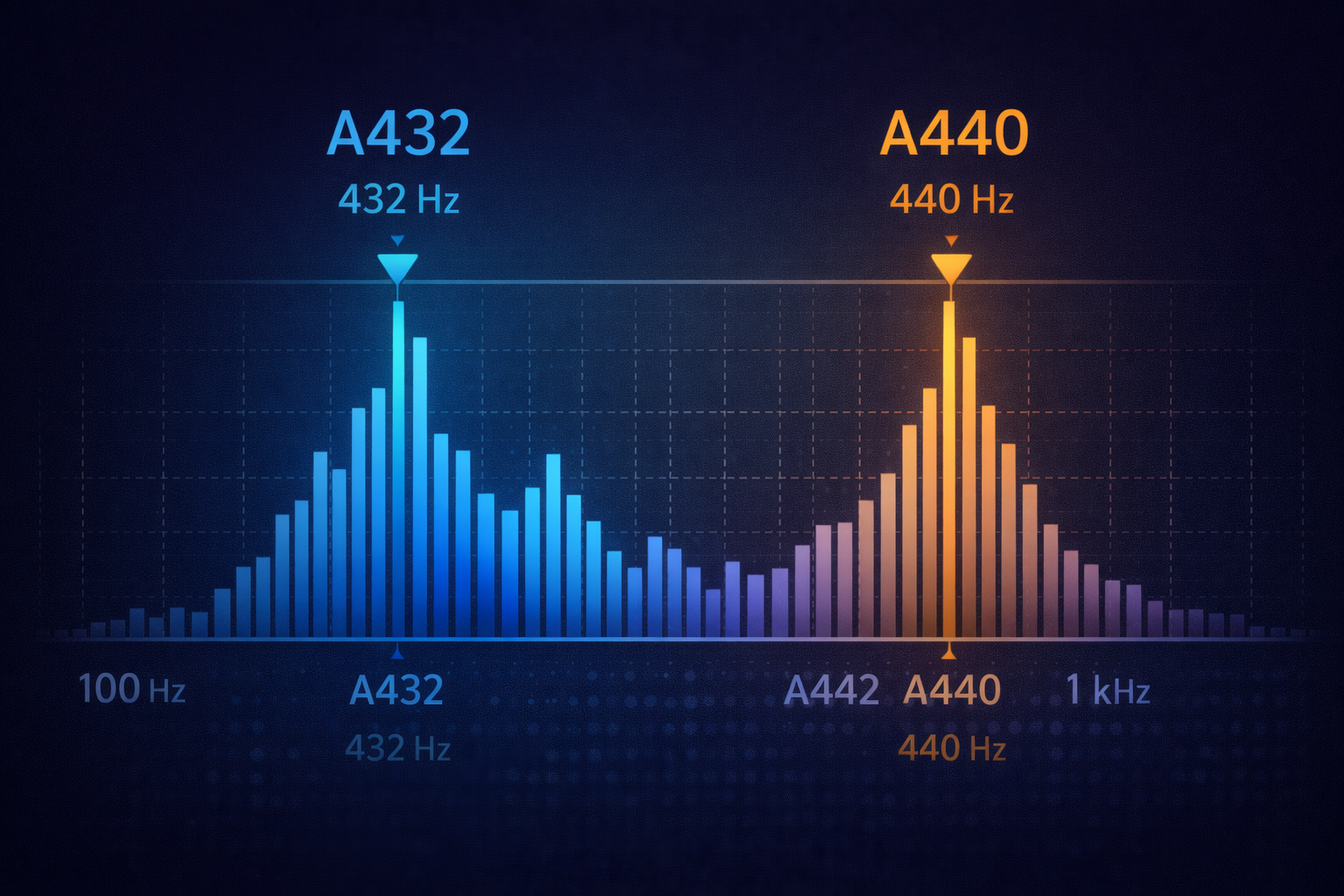
Alternatives like A432 or Baroque pitch (≈415 Hz) persist for musical, historical, or aesthetic reasons. Musicians choose them for period authenticity, perceived warmth, or personal preference.
Quick comparison
- A440: Modern standard used in most genres.
- A432: Slightly lower; often described as "warmer".
- A415: Baroque pitch used in historical performance.
Practical effects on instruments and timbre
Lowering concert pitch (for example, 440 → 432 Hz) reduces string tension for fixed-scale string instruments. This can subtly affect attack, sustain, and perceived brightness. For ensemble work, consistency matters more than the exact reference.
How to tune to a different reference
- Change reference frequency in digital tuners or DAWs.
- Adjust hardware tuners that support ±Hz calibration.
- Retune acoustic instruments carefully and recheck octaves.
- Pianos require a technician for permanent pitch changes.
Recording and mixing considerations
If a recording uses a non-standard reference, retune instruments or pitch-shift the track. Small shifts are feasible, but watch for artifacts and vocal formant distortion.
Experiment: a simple listening test
Record the same phrase at A440 and A432, normalize levels, and listen blind. Document room, microphone, and instrument to avoid expectation bias.
FAQ
Q: Will tuning to A432 damage my instrument?
A: No. It slightly reduces tension; compatibility is the main concern.
Q: Is A432 objectively better?
A: No. Preference depends on musical context and listener perception.
Q: How do I identify tuning in recordings?
A: Measure sustained tones with a reliable tuner or spectrum analyzer.